
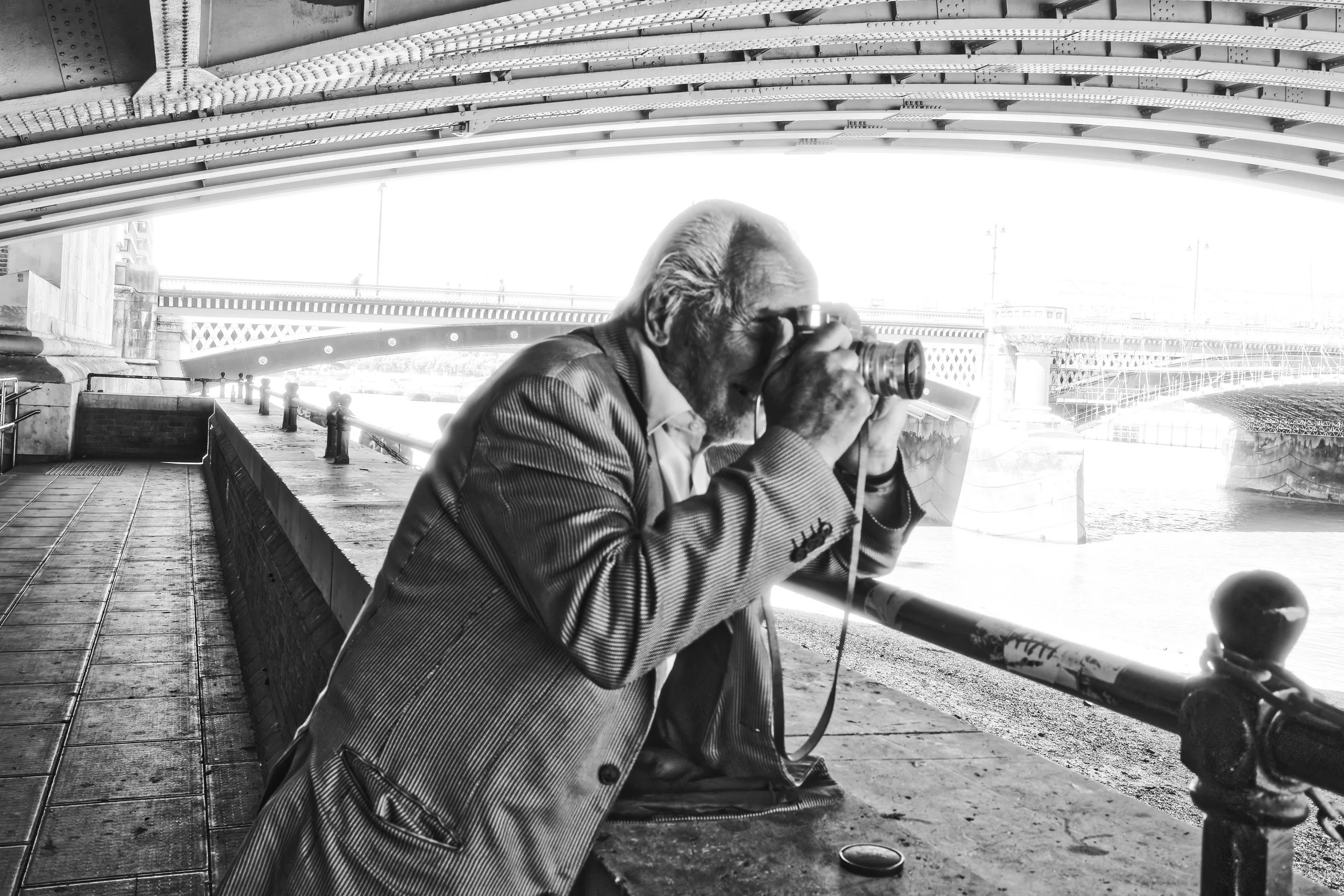
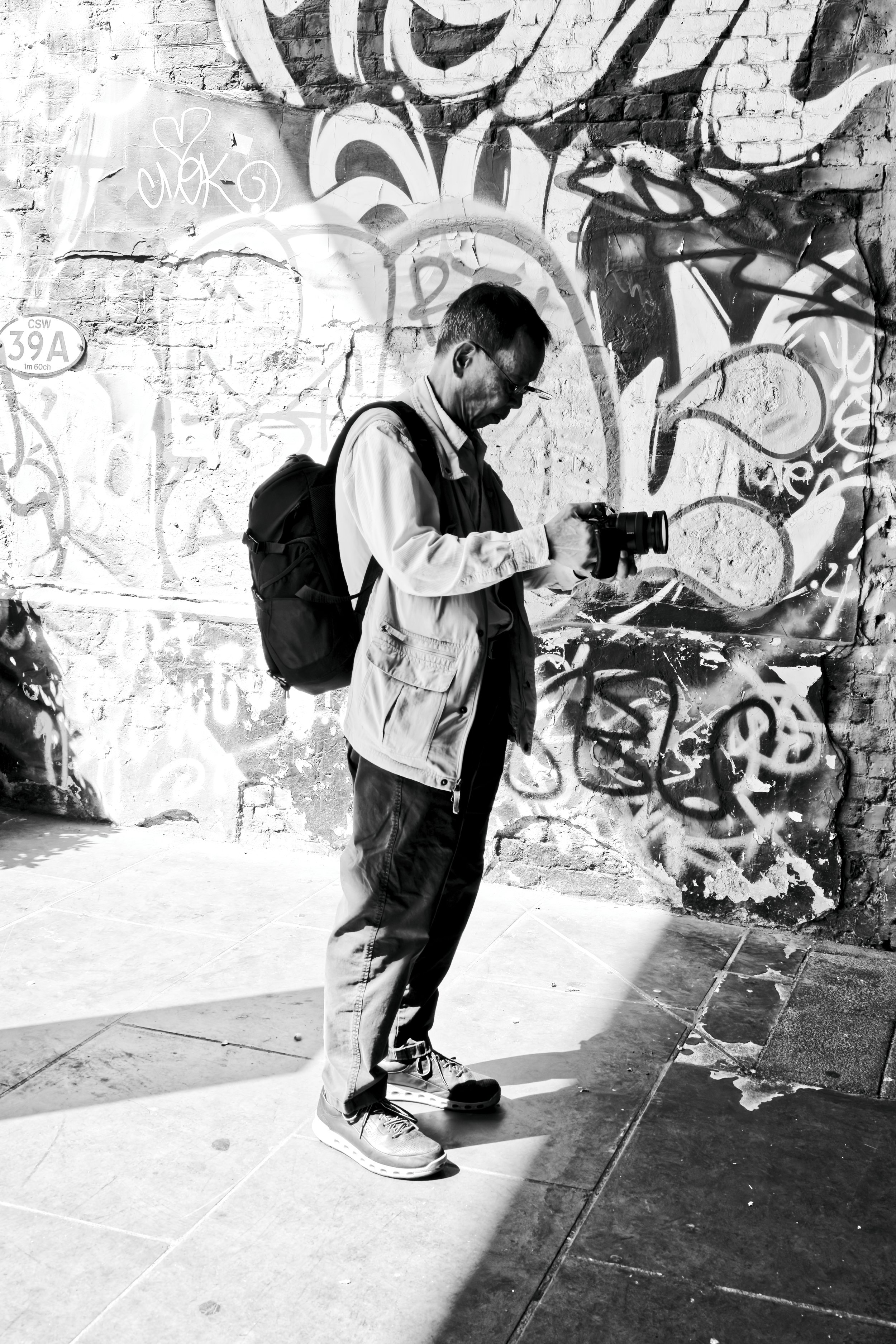
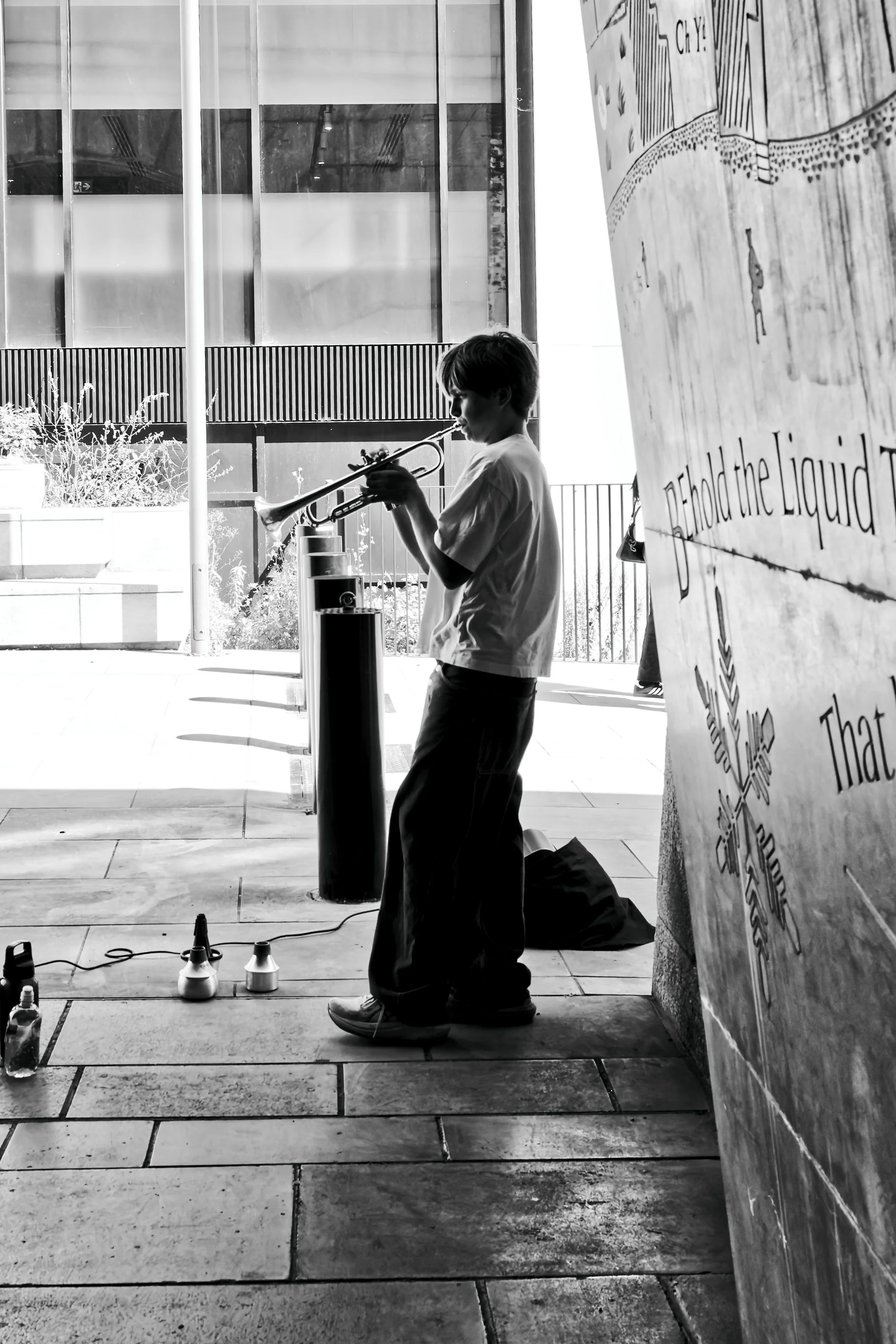
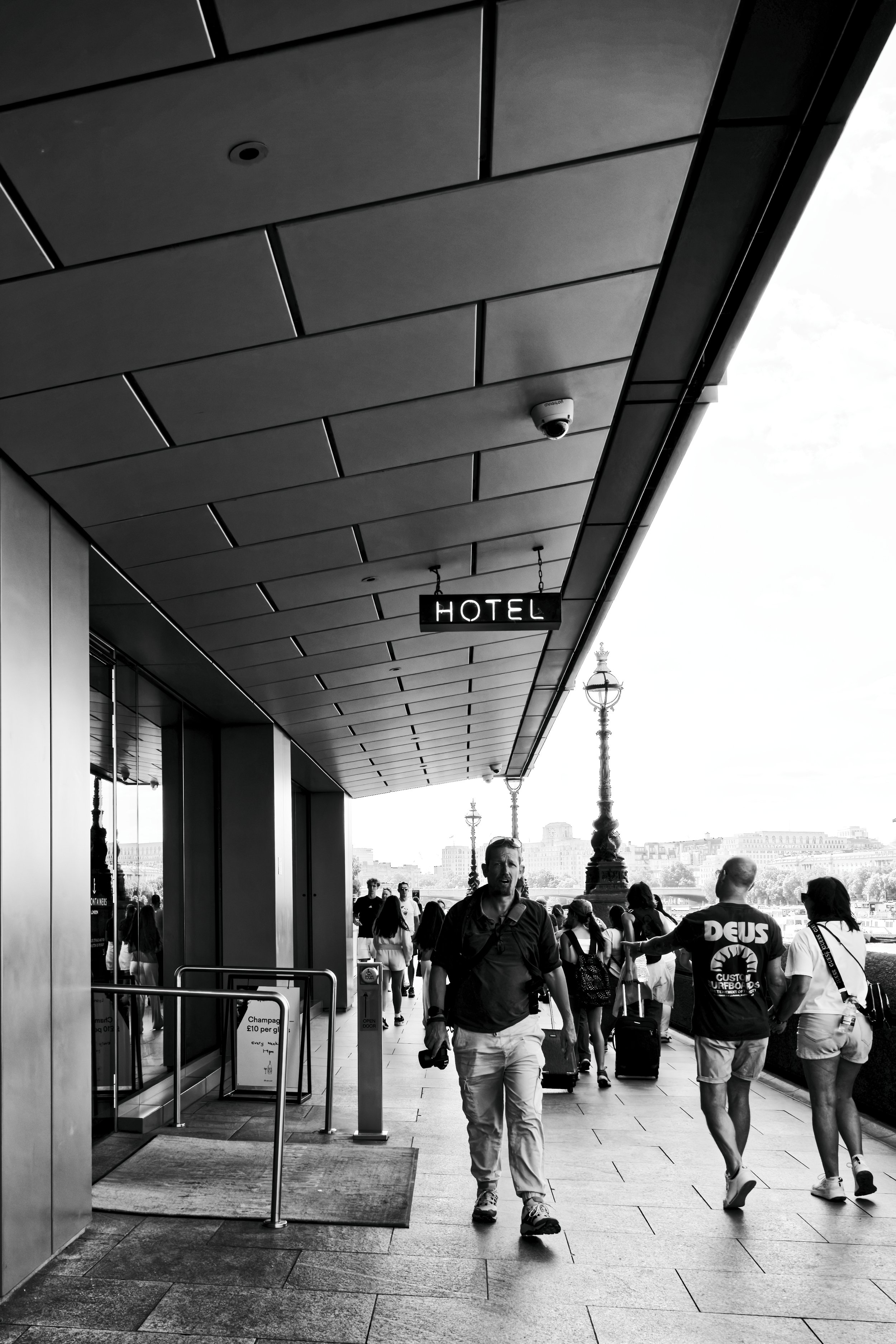
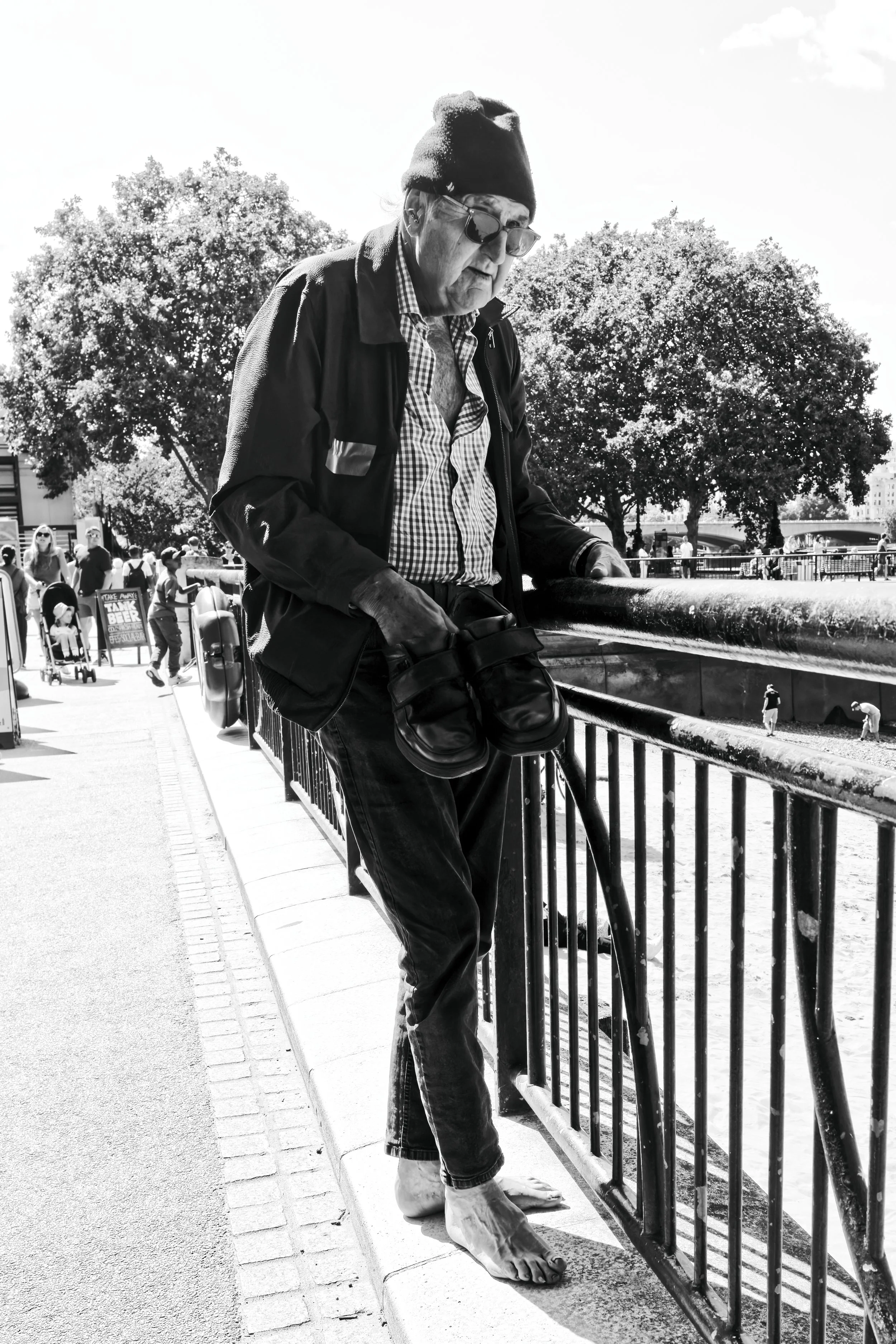
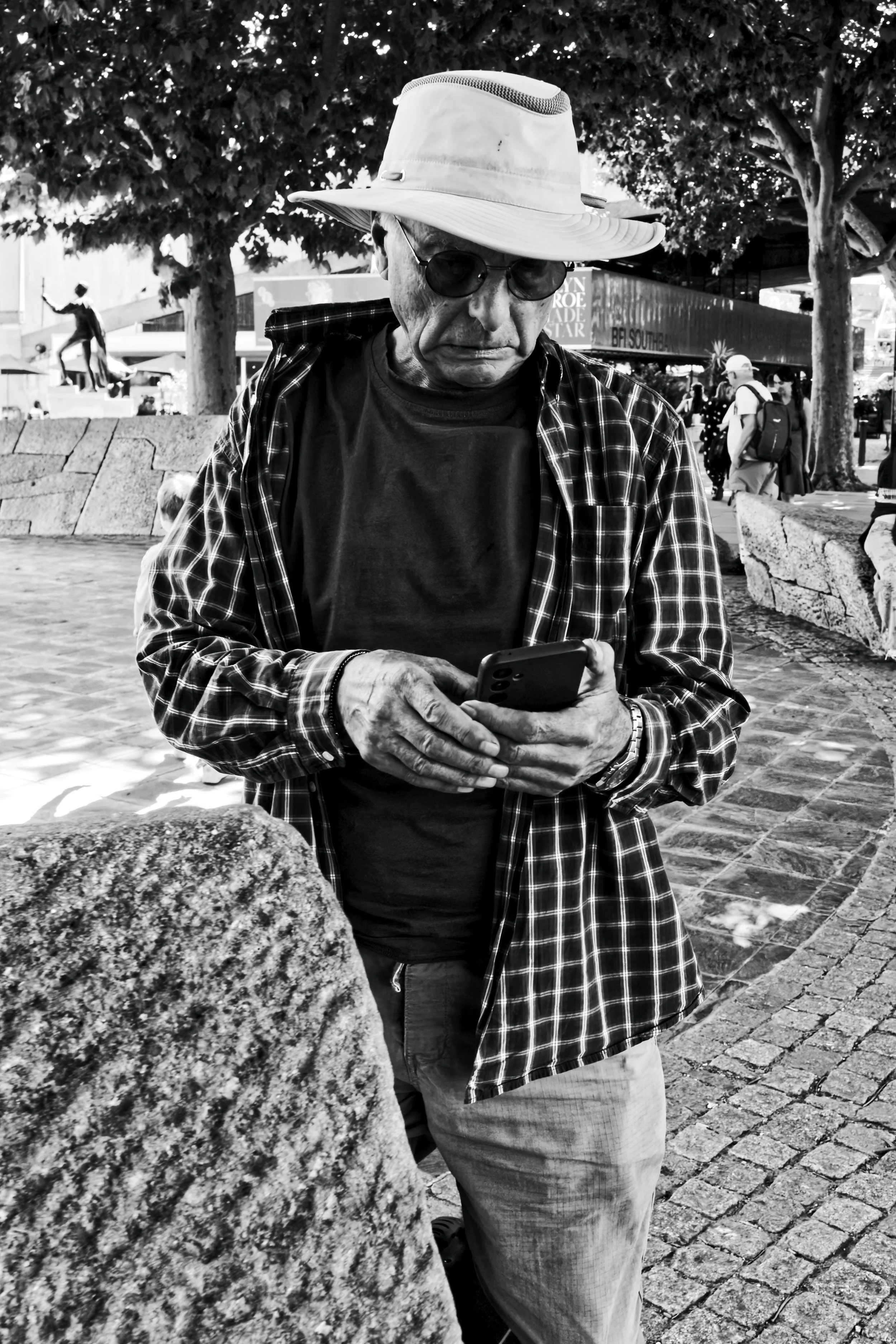
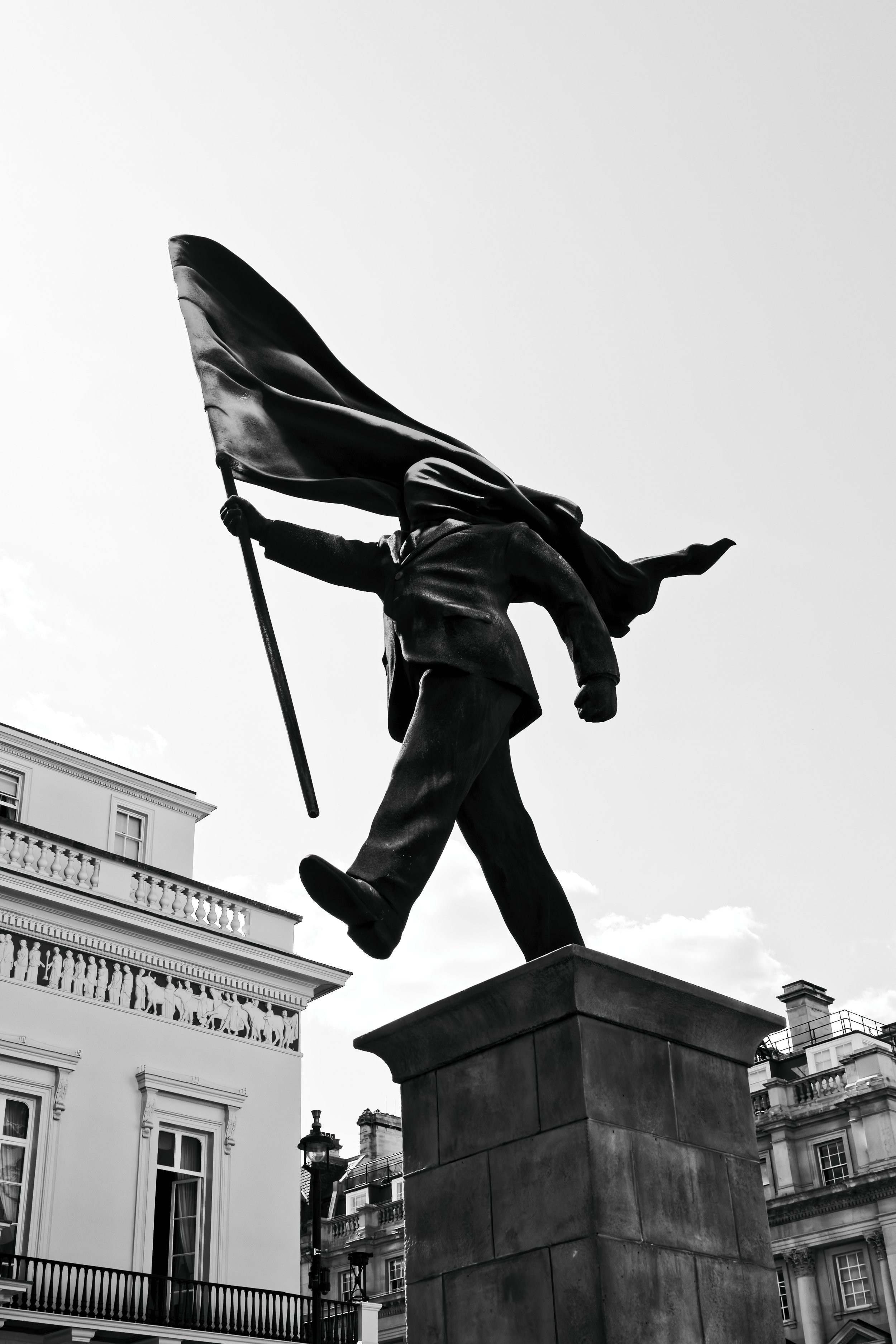
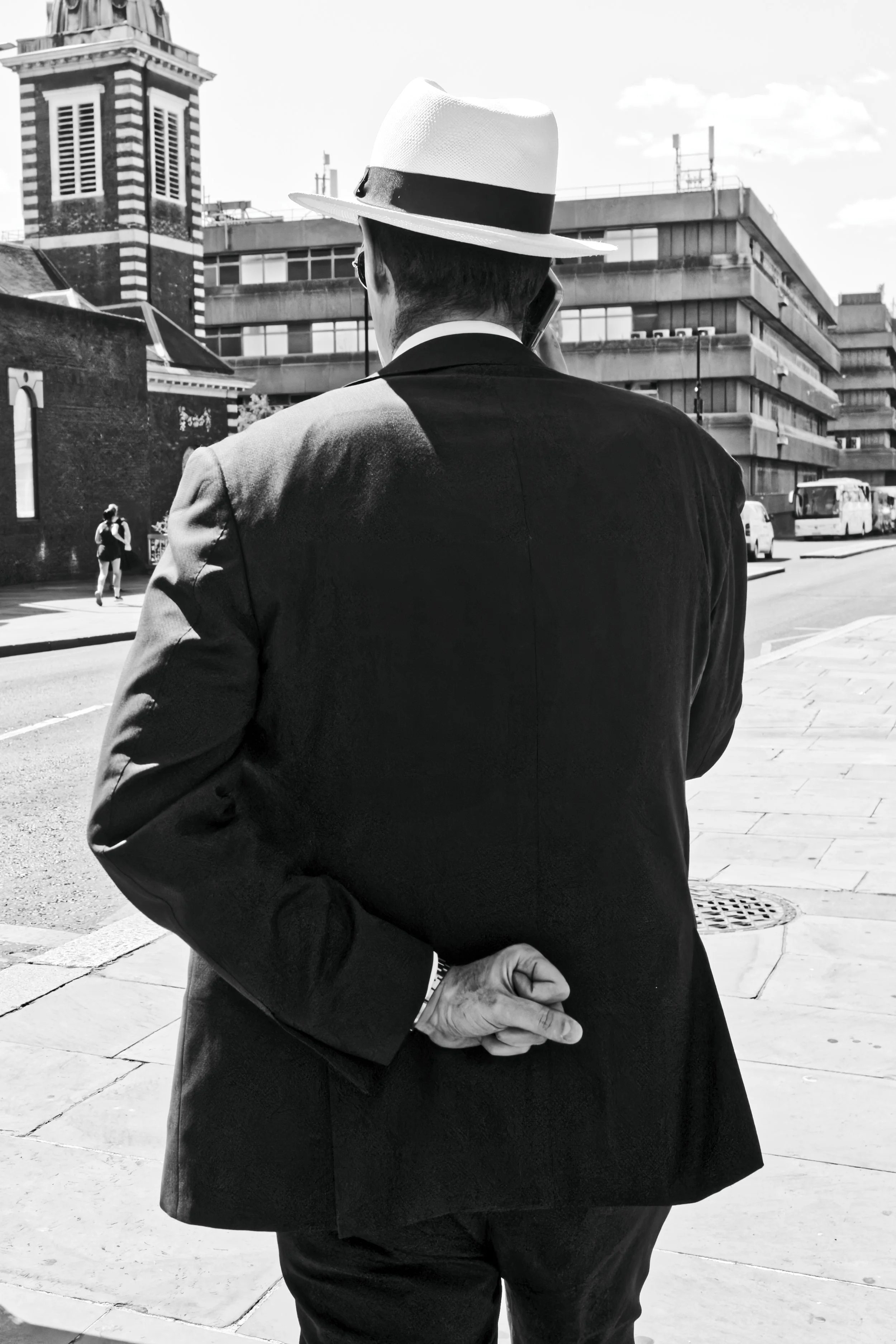
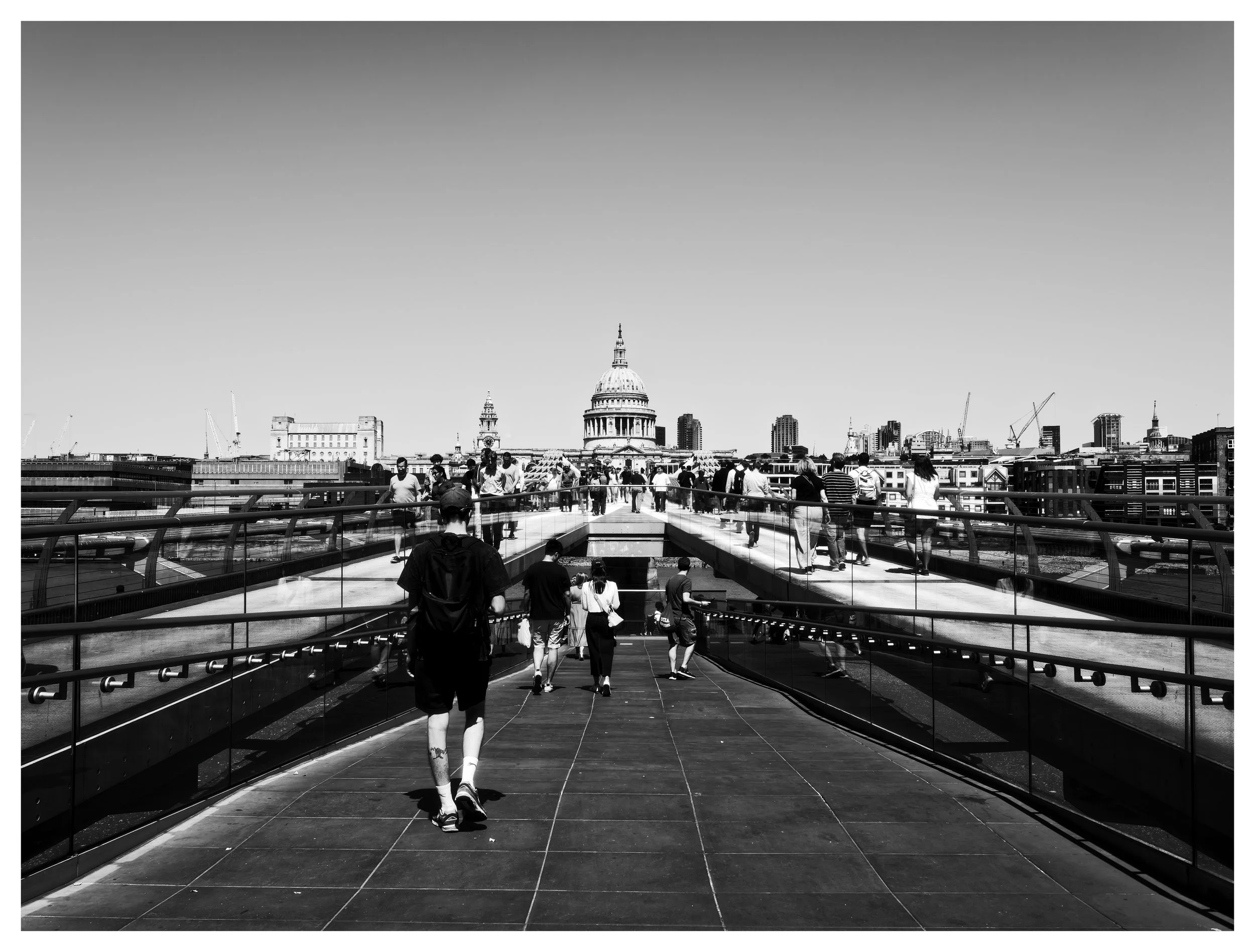
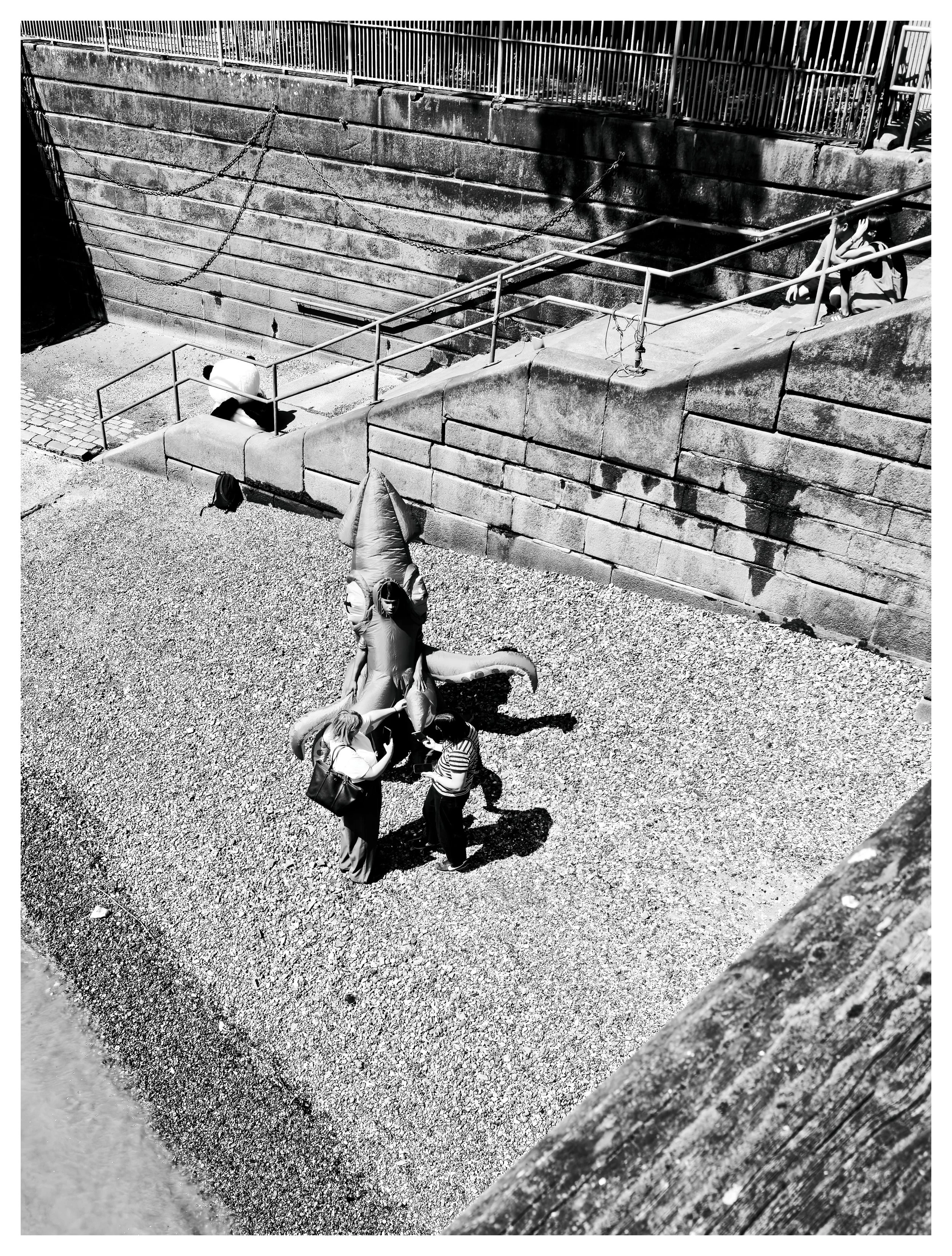
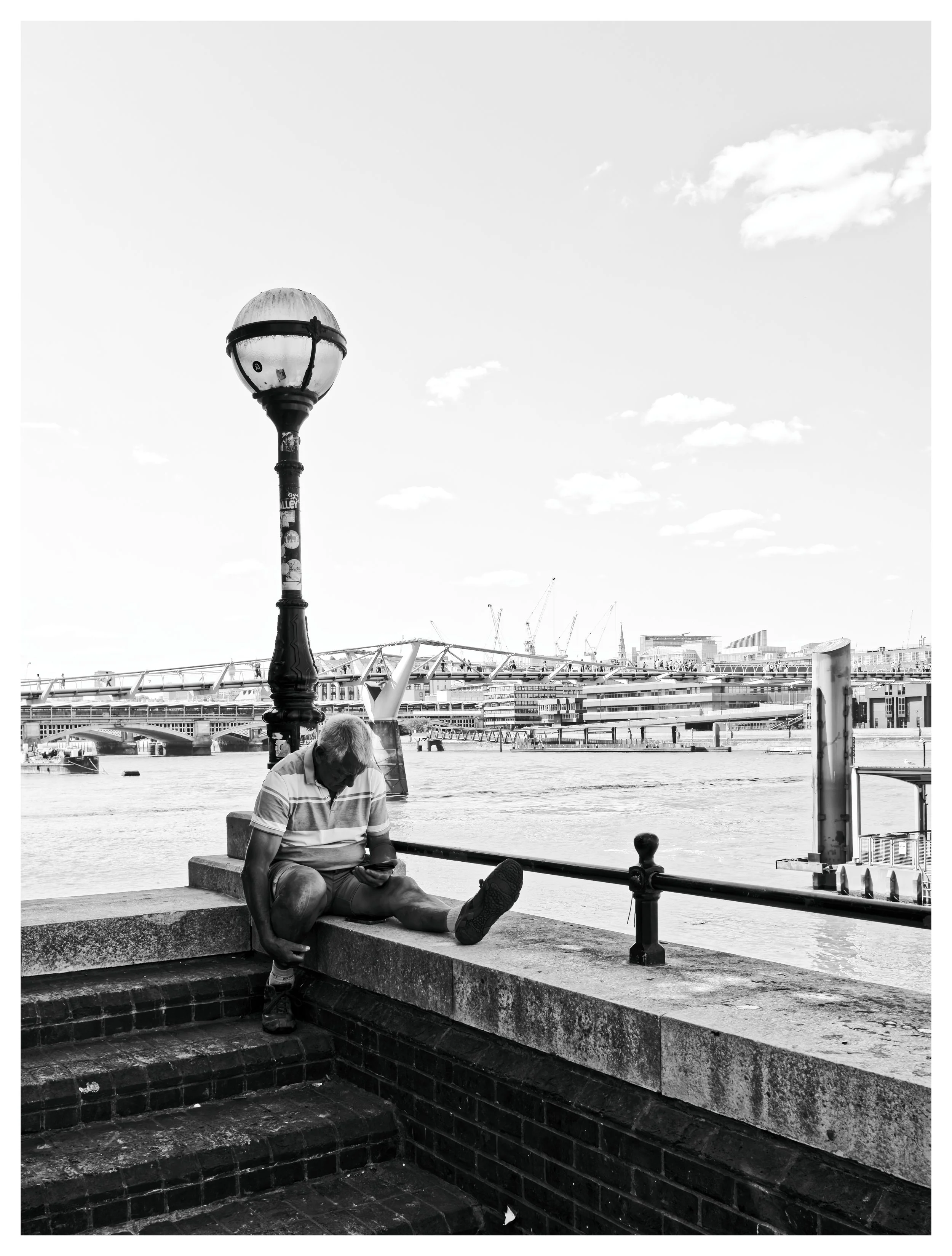
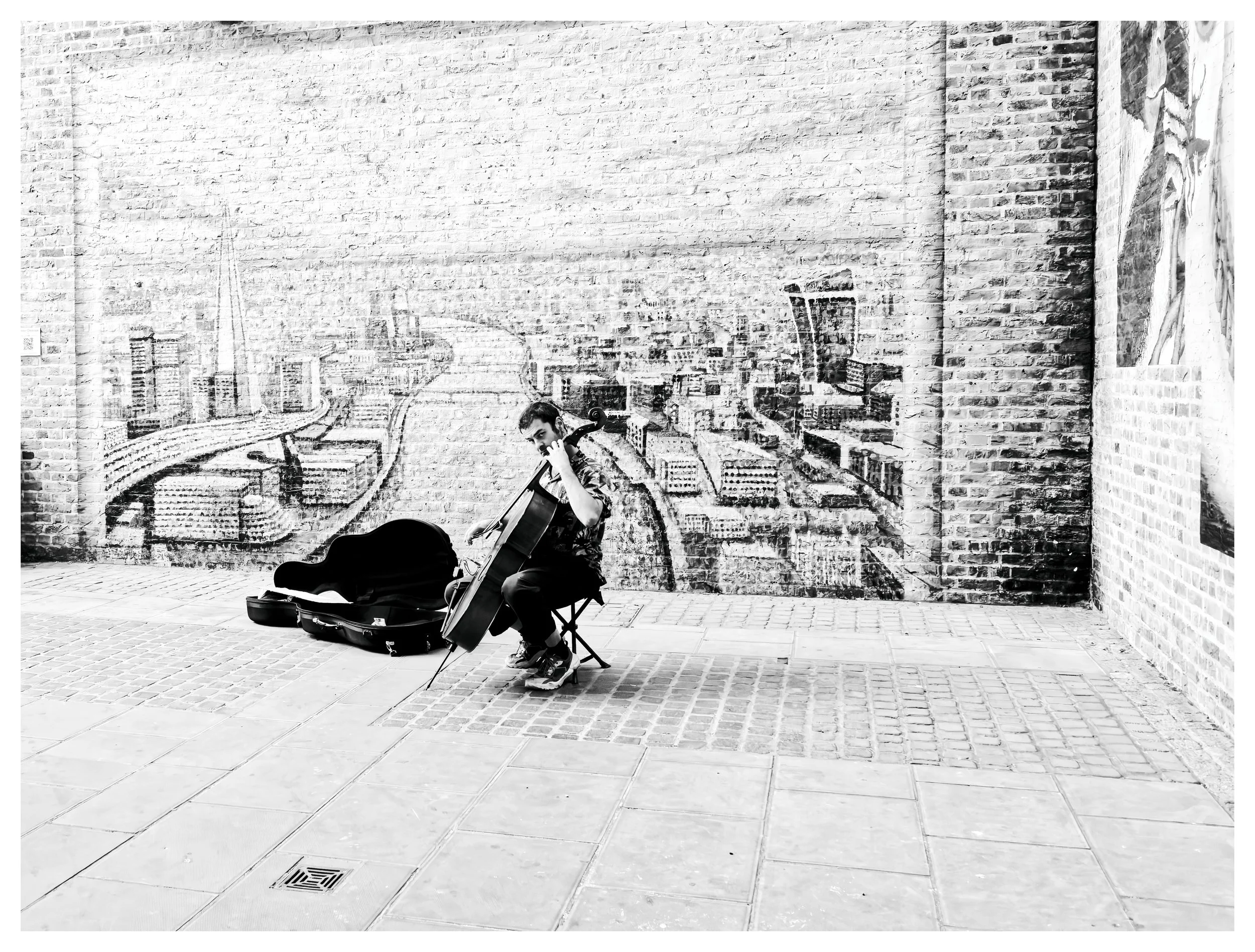
It had been a couple of years since I last went out with the sole intention of shooting street photography in my hometown of London. I have photographed the city countless times over the years, but this particular day felt strangely unfamiliar. I knew the streets, the landmarks and the usual flow of people, yet I felt noticeably rusty behind the camera.
Recently, most of my personal photography has been centred around travelling. That usually involves working at a slower pace, exploring a place over several days and taking more time to think about composition, light and atmosphere. Returning to London street photography reminded me that it asks for something quite different.
Street photography is immediate. You have to notice a moment, decide whether it is going to develop into something interesting and react before it disappears. There is rarely enough time to reconsider the composition or wait for another opportunity. Once the moment has gone, it has usually gone for good.
A Long Street Photography Walk Through London
I began the day at Marble Arch and walked down Oxford Street before cutting through Soho. From there, I continued through Leicester Square and Trafalgar Square, eventually crossing the Thames and joining the South Bank.
I followed the river towards the Tate Modern, crossed back over Millennium Bridge and then joined the newer pedestrian route running along the north side of the Thames. I continued east until I reached Tower Bridge.
At that point, I turned around and began the long walk back through central London, eventually crossing near Embankment and finishing the day in Piccadilly Circus.
Marble Arch → Oxford Street → Soho → Leicester Square → Trafalgar Square → South Bank → Tate Modern → Millennium Bridge → Tower Bridge → Embankment → Piccadilly Circus
By the end of the walk, I had recorded just over 26,000 steps, which I did not think was too bad going. I was also testing the latest Hume Band 2.0, so the entire day was recorded along with my step count and a wide range of additional health and activity data.
A long day walking around London is probably one of the better real-world tests for a wearable like this. Rather than deliberately exercising for an hour and then stopping, the movement was spread throughout the day, with plenty of changes in pace, pauses, stairs, bridges and long stretches of continuous walking.
Feeling Rusty with the Ricoh GR III
I took the Ricoh GR III as my main street photography camera. On paper, it is almost perfect for this kind of day. It is small, light, discreet and easy to carry for hours without feeling as though I have a full camera kit hanging from my shoulder.
However, the first half of the walk was frustrating. I was not reacting quickly enough, I was second-guessing the camera settings and I never felt completely ready when something interesting happened in front of me. A few potential pictures disappeared while I was still deciding how I wanted the Ricoh configured.
This was partly a camera setup issue, but I think it was also a sign that I had simply fallen out of practice. When I used to shoot street photography more regularly, many of those decisions became instinctive. I knew where to stand, how close I wanted to be and how the camera would respond without having to consciously think about every setting.
It took roughly half the walk before I finally had the Ricoh GR III street photography settings working in a way that felt natural. Once the camera stopped becoming a distraction, I started looking properly again. That was the point at which I finally began to find a few frames.
Street Photography Versus Travel Photography
One of the more interesting things I took away from the day was just how different street photography feels compared with the travel photography I have been producing recently.
With travel photography, I am often looking for a combination of place, atmosphere, architecture and light. There is usually more time to study a scene and decide how I want the final photograph to feel. Even when people appear within the frame, they are often part of a larger composition.
Street photography feels more reactive. The picture might depend on a gesture, an expression, a coincidence or the brief alignment of several unrelated elements. The photographer has to anticipate these fragments before they come together.
Neither approach is necessarily better, but they require a different state of mind. Travel photography has recently encouraged me to slow down and become more considered. London street photography forced me to speed up again, trust my instincts and accept that not every frame could be completely controlled.
Editing the Photographs in DxO PhotoLab 9
I edited the final Ricoh GR III RAW files in DxO PhotoLab 9, which has now become my preferred editing software for both travel and street photography.
The Ricoh files already have a lot of flexibility, but DxO PhotoLab gives me a very natural starting point. The lens corrections, tonal controls, colour adjustments and local editing tools allow me to refine each image without making it feel overprocessed.
For this set, I wanted the photographs to retain the energy and slight roughness of the day. I was not trying to make London look too polished. The appeal of the images is in the movement, the people, the changing light and the unpredictability of walking through several very different parts of the city.
Using DxO PhotoLab 9 for Ricoh GR III files also means I can keep my travel and street photography within the same editing workflow. That consistency is becoming increasingly important as I build a larger body of work from different cameras, destinations and photographic projects.
Getting Back into the Flow
I did not return home with hundreds of finished photographs, but that was never really the point. After a slow and fairly frustrating start, I eventually found a small number of frames that felt worthwhile.
More importantly, I could feel the rhythm beginning to return. I started noticing gestures, reflections, fragments of light and small moments between people that I would probably have missed earlier in the day.
Street photography is clearly something that needs to be practised. It is not enough to understand the technical side of photography or to know how a camera works. The ability to observe and react quickly becomes sharper through repetition.
This walk was a useful reminder that I need to get out with the Ricoh GR III more often. London is still one of the best cities in the world for street photography, but it does not automatically hand you photographs. You have to be present, patient and ready when the right moment finally appears.